Case study: Workshopping with students
My role: Senior Product Designer at EdAider. In this project: Design lead, from workshop design through to the priority list the team built against.
Overview: Assessing an AI maths learning platform with a built in tutor. During an eight-week pilot with 309 year-nine students across six schools in Enköping, I ran multiple workshops at different stages with support from the product lead.
This case study focusses on three different workshops during one day with three classes at Enöglaskolan and a separate session with their maths teachers, with a subsequent setup of a weekly feedback flow for all teachers.
Responsibilities: Workshop design and facilitation, prototype creation and testing, thematic analysis of more than 100 student quotes, prioritised backlog.
Outcome: Every student contributed and gave feedback. The team made 515 product changes across the eight weeks of the pilot, most of them drawn from a priority as a result of this workshop day. Later results were national test pass rates rose from 51.3% to 58.5% against the previous year, and high grades more than doubled, from 5.1% to 12.3%.
The pilot now rolls out to every school in the municipality.
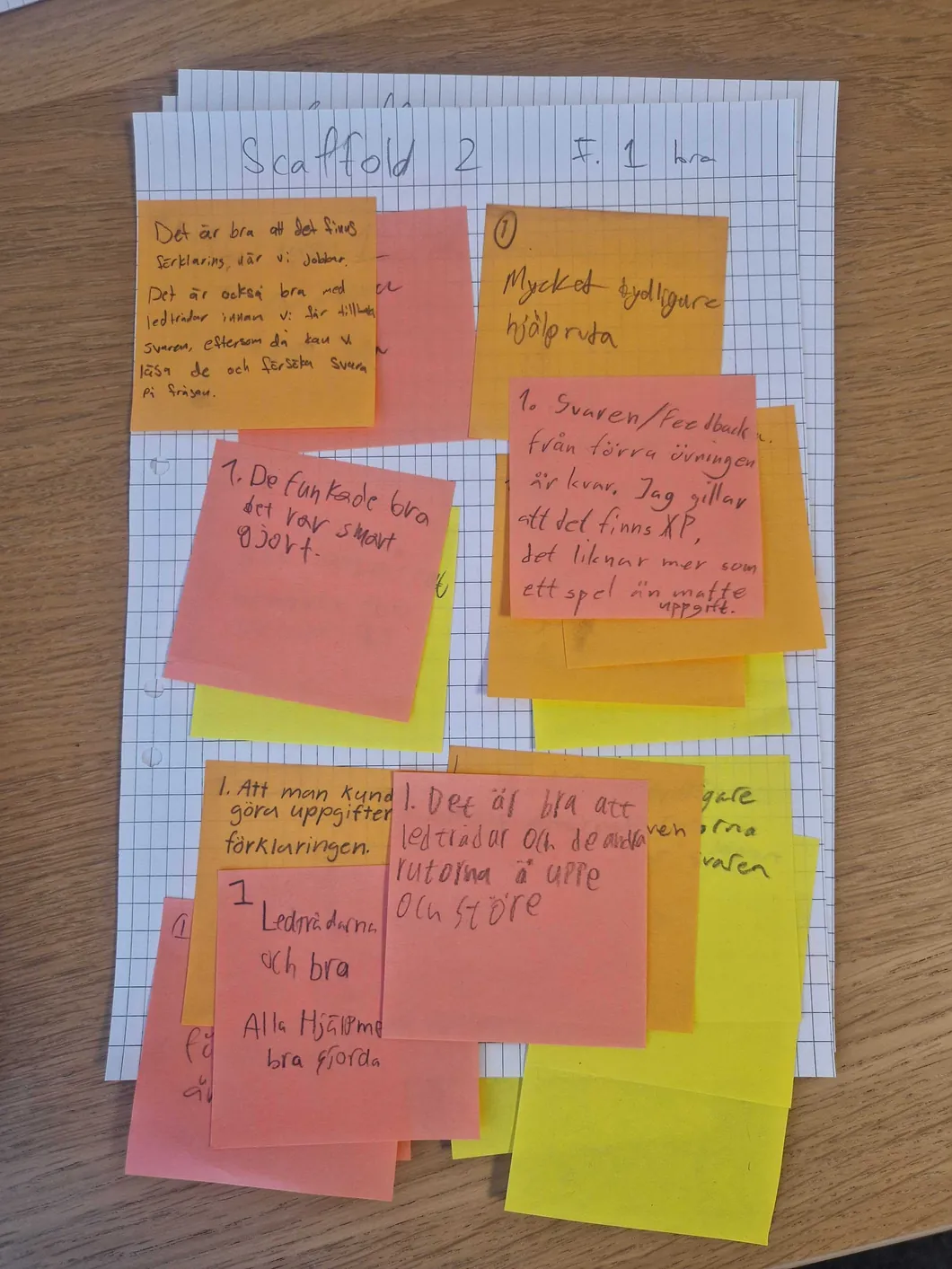 Scaffold 2. Post-its answering "What was working well?"
Workshop challenge
Fifteen-year-olds will tell you an app works fine. However, we needed specific, actionable feedback on a live product, from a room of thirty students. Three different workshop variations to gather narrow feedback on scaffolding techniques and wide on gamification options.
The result
Every student in the three workshops gave us product feedback which I expanded through group and 1-1 discussions. It became a single prioritised list that the team shipped against for the rest of the pilot.
How the workshops ran
The goal wasn't to pit versions against each other and declare a winner. Instead, I designed the session to cast widely: two genuinely different scaffolding approaches, two genuinely different gamification concepts, deliberately divergent rather than variations on a theme. The point was to surface a wider range of reactions, preferences, and unmet needs than a single direction ever could, and to let patterns emerge across concepts rather than forcing a premature choice between two.
Session 1.
General feedback of the current version of the learning platform that they had been using for two weeks, to catch big issues.
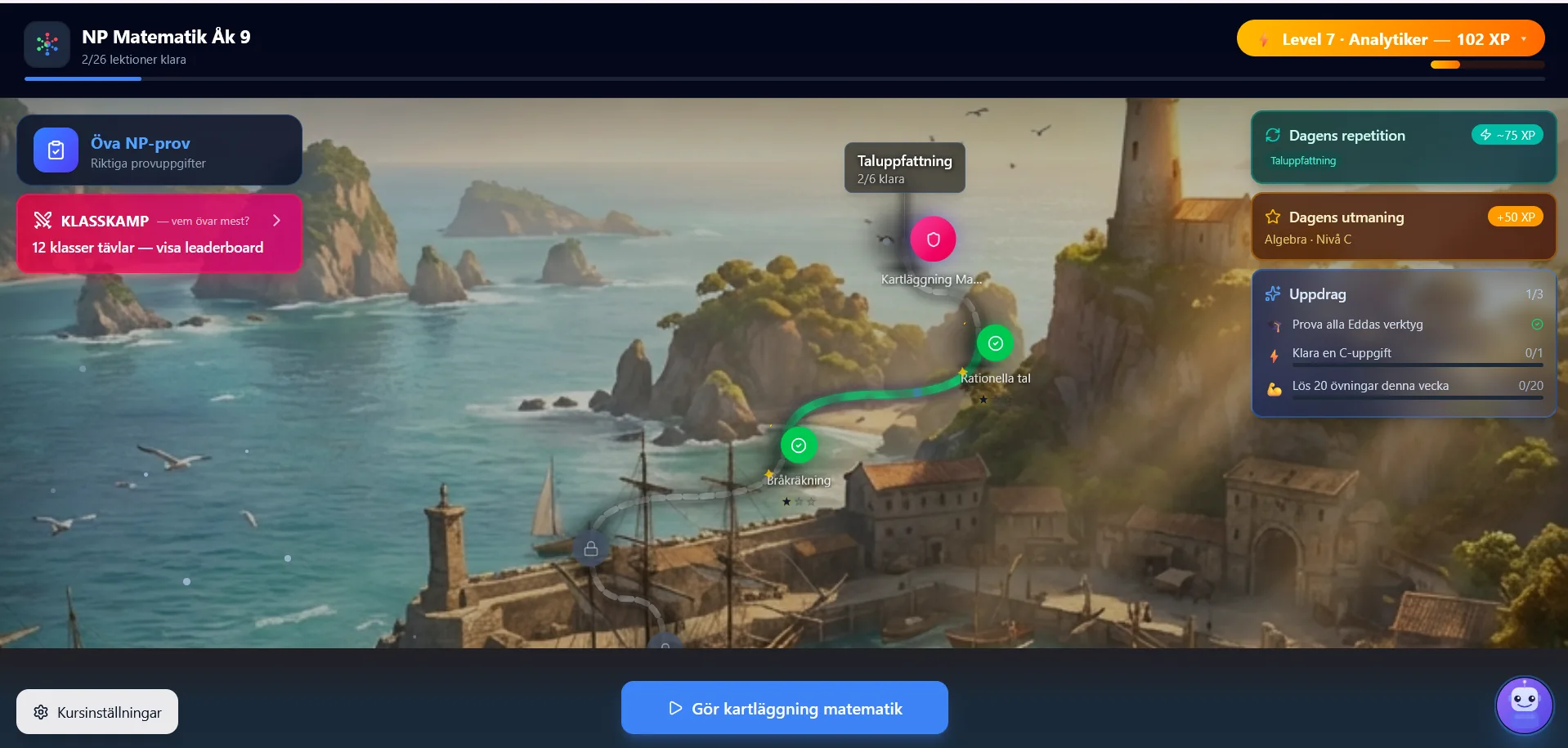 Current 1: menu page with map navigation view
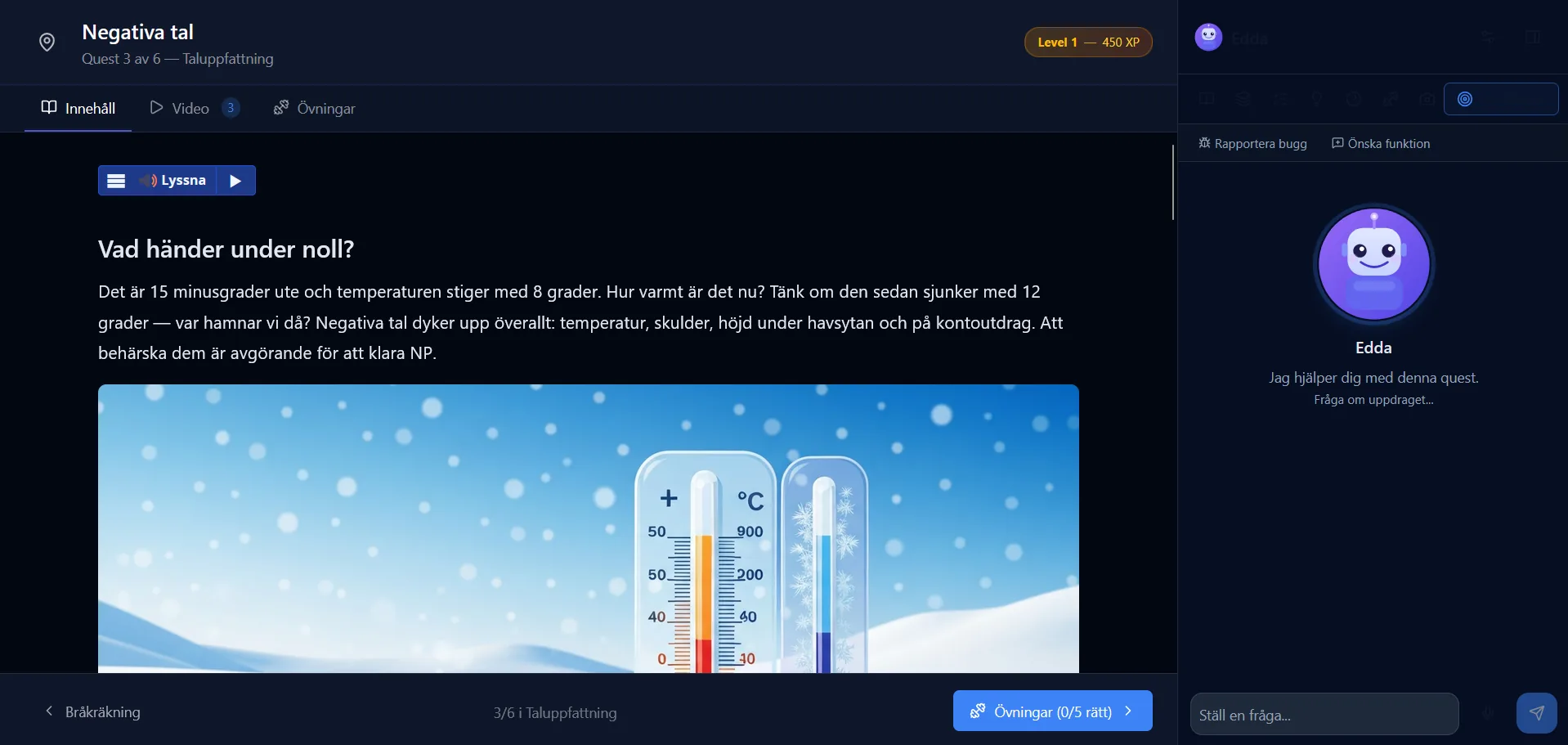 Current 2: start of a lesson with ai chat
Session 2.
Two prototypes built to test educational scaffolding with built in quizzes and interaction within the lesson, and how to increase the relationship between the AI tutor and the student by enmeshing the maths exercises with chat responses.
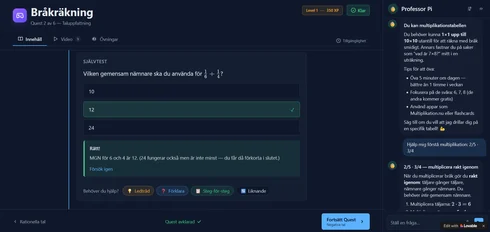 Scaffold 1: exercises inside the lesson
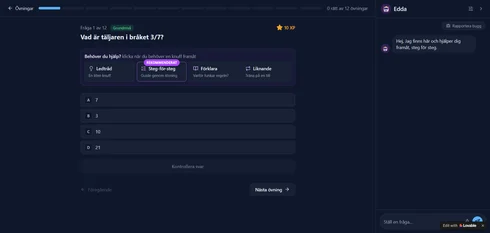 Scaffold 2: help above the answers, feedback in the chat
Session 3.
Explored game theory to see which aspects resonated and engaged the students. Fraction Forge is card-based. Arcana Mathematica is an RPG, all magic and spells and XP. Vastly different concepts to open up the conversation with the students and understand their gamification requirements and interests.
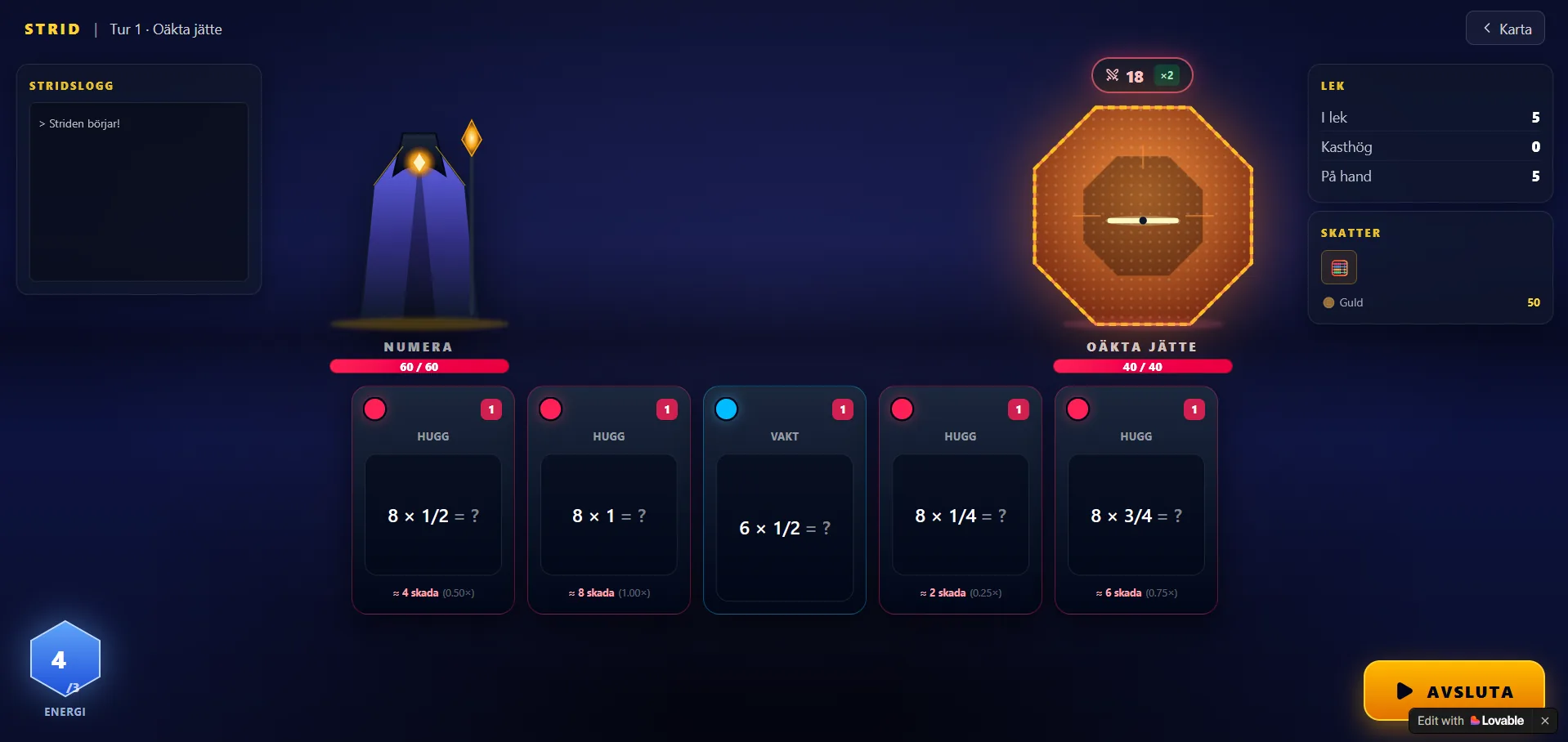 Fraction Forge: every card is a fraction
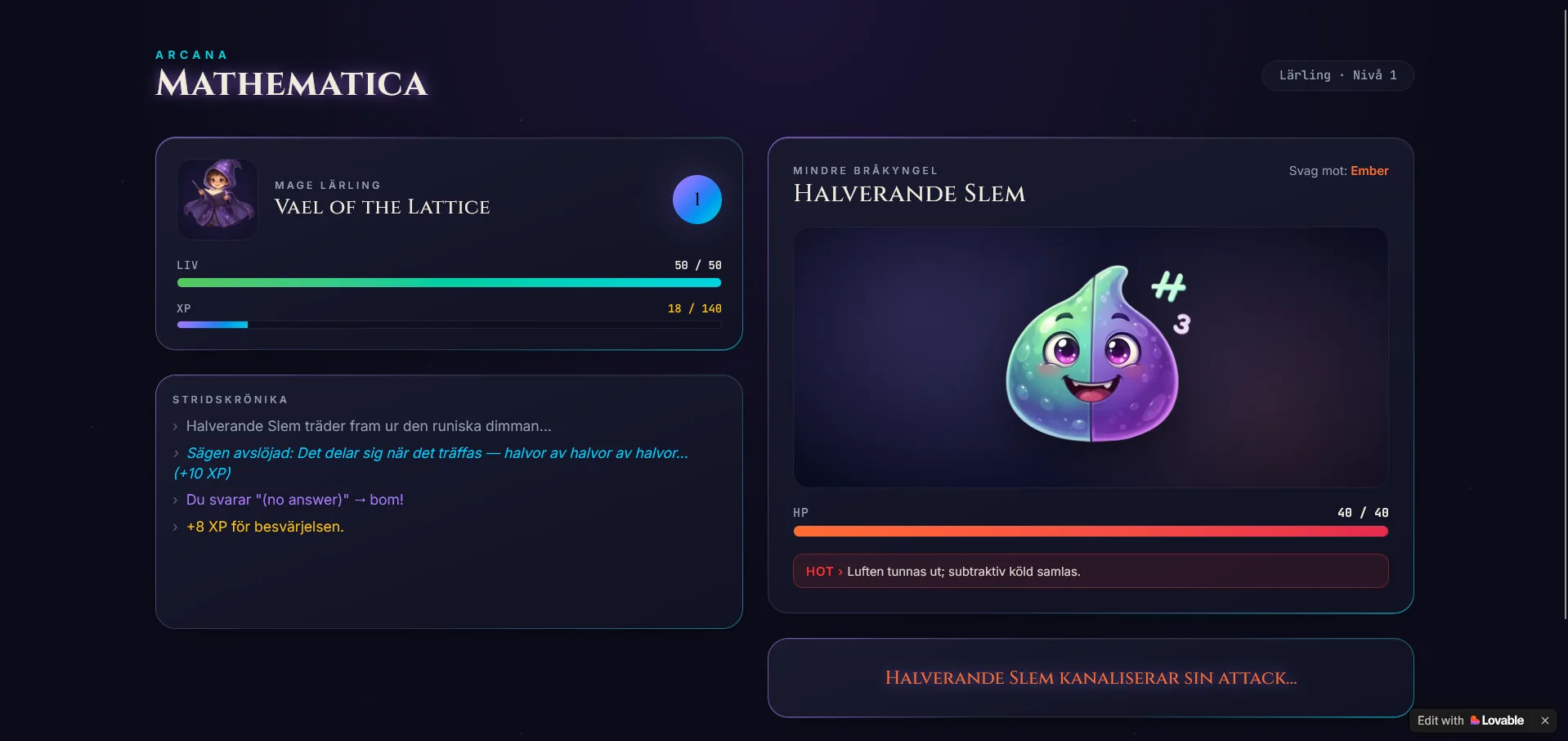 Arcana Mathematica: an RPG with XP and spells
Prototypes were built in lovable. Each session ran the same loop, twice: a one-minute demo, eight minutes to play, then fifteen minutes answering four questions on sticky notes. What worked? What didn't? Do you want to keep learning, and why? What would you change? If time was left, they voted on what mattered most. The session closed on open feedback.
Following standard workshop procedure, writing beats talking. So nobody defers to the loudest voice at the table, and every note is a quote you can trace back to a person.
From notes to backlog
Claude Code was used to analyse the transcribed notes. Each note was coded and sorted into four priority tiers, with the student's own words attached to the item it produced. A theme only made the list if a real quote proved it.
"AI-verktyget förklarar istället för att ge svaret direkt."The AI tool explains instead of just giving you the answer. (Student, Enöglaskolan)
What the students actually wanted
Four things came back often enough to go straight to the top of the backlog.
- Make it a game. Avatars, rewards, sound effects. Requested in every single workshop. The current version introduced itself as a game but did not follow through with game mechanics.
- Tell me when I'm wrong. Explanations at the moment of the mistake, not at the end of the exercise.
- Bigger, bolder help. The AI help button belonged above the answers, not below them. The help was there but not obivous enough.
- Don't lose my work. Progress wasn't saved when a tab closed in the diagnosis test. A trust-breaking bug the usage data never showed us.
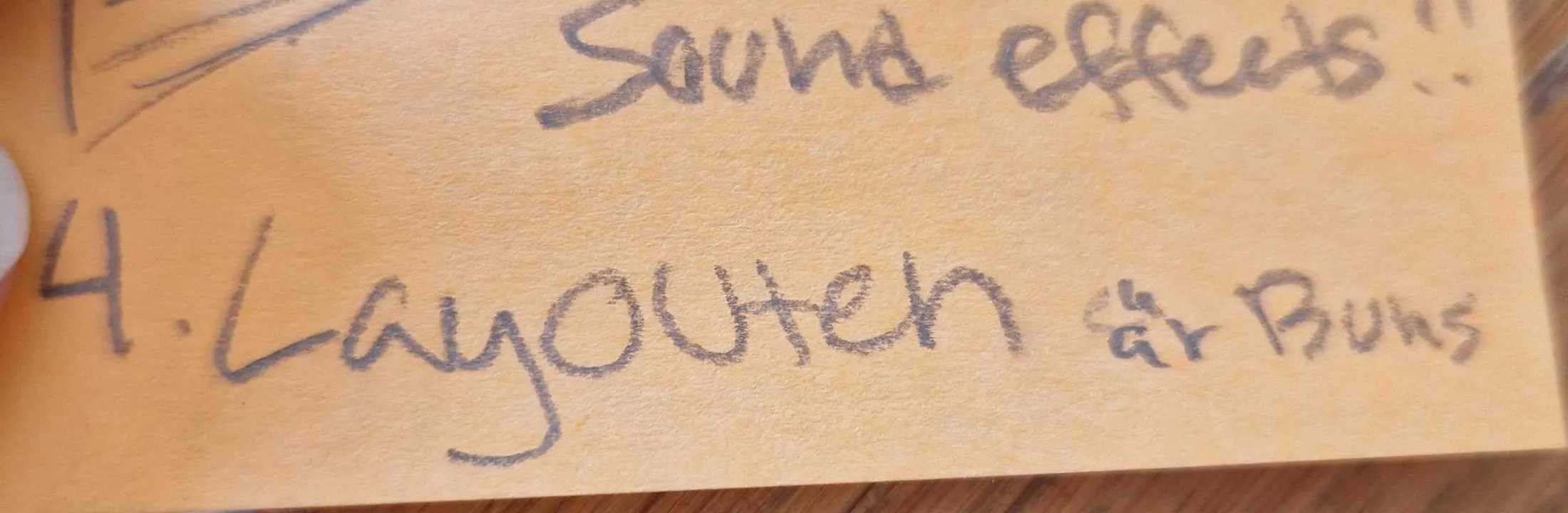 Strong student feedback. "The layout is crap". A subsequent session with this student teased out the underlying problem: they couldn't find the exercises corresponding to the lesson.
The teachers' session
Run separately, on the same day. The teachers confirmed what the usage data had only hinted at: a class engages with the tool about as much as its teacher does. Teacher onboarding became a formal part of the rollout plan.
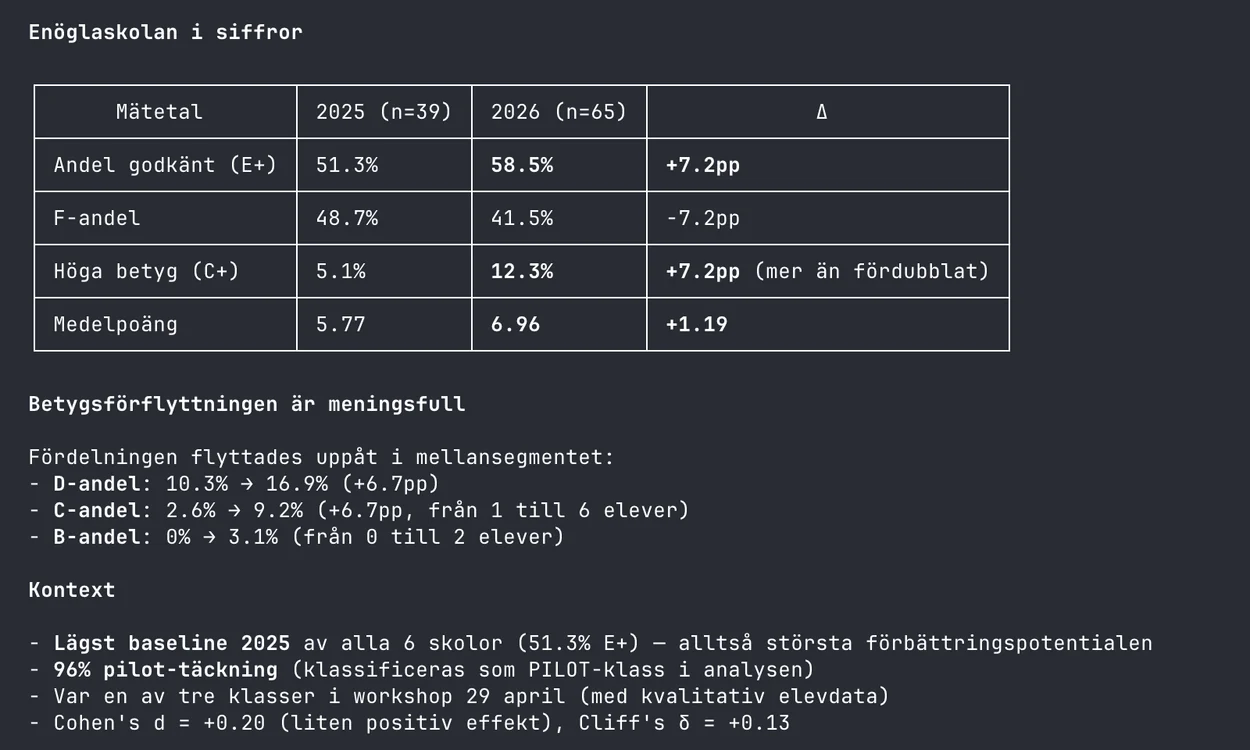 Enöglaskolan, the school that took up the pilot most widely
The outcome
The team made 515 product changes across the eight weeks of the pilot, most of them drawn from this list. At Enöglaskolan, national test pass rates rose from 51.3% to 58.5% against the previous year, and high grades more than doubled, from 5.1% to 12.3%.
The pilot now rolls out to every school in the municipality.
Takeaway
A blunt complaint is rarely the real problem. "The layout is crap" turned out to mean "I can't find the exercises." This was reached only by asking the next question.
Highlight
At the end of session 3, two girls came up quietly to say they didn't want battles but rather something cosy or collectibles. Both game prototypes were combat; neither was for them. Future exploration needed in that direction!