Educational mobile game
2016–2021
Overview: I co-founded an edtech company with five others. Checheza was a passionate development team creating an educational app for children. Our mission was to create a free and open-source app to assist young children to learn the basics of reading, writing and math.
My role: Sole designer.
Responsibilities: As the sole designer in a startup, I had a wide range of tasks. Primarily I focused on the app, where I designed the games, UI, UX, concept art and wrote specifications for the game design. On the branding side, I created new logos and fonts, produced branding guidelines, took photographs, and designed and coded the website.
Collaborators: The five other co-founders: two business development, two developers, one marketing.

A wide scope of challenges
Over the six years, I worked on various types of projects, ranging from small-scale features to larger, more complex initiatives. The following two examples show this range:
- Game specs for "Learn my letters"
- User research on the target market

Game specifications: "Learn my letters"
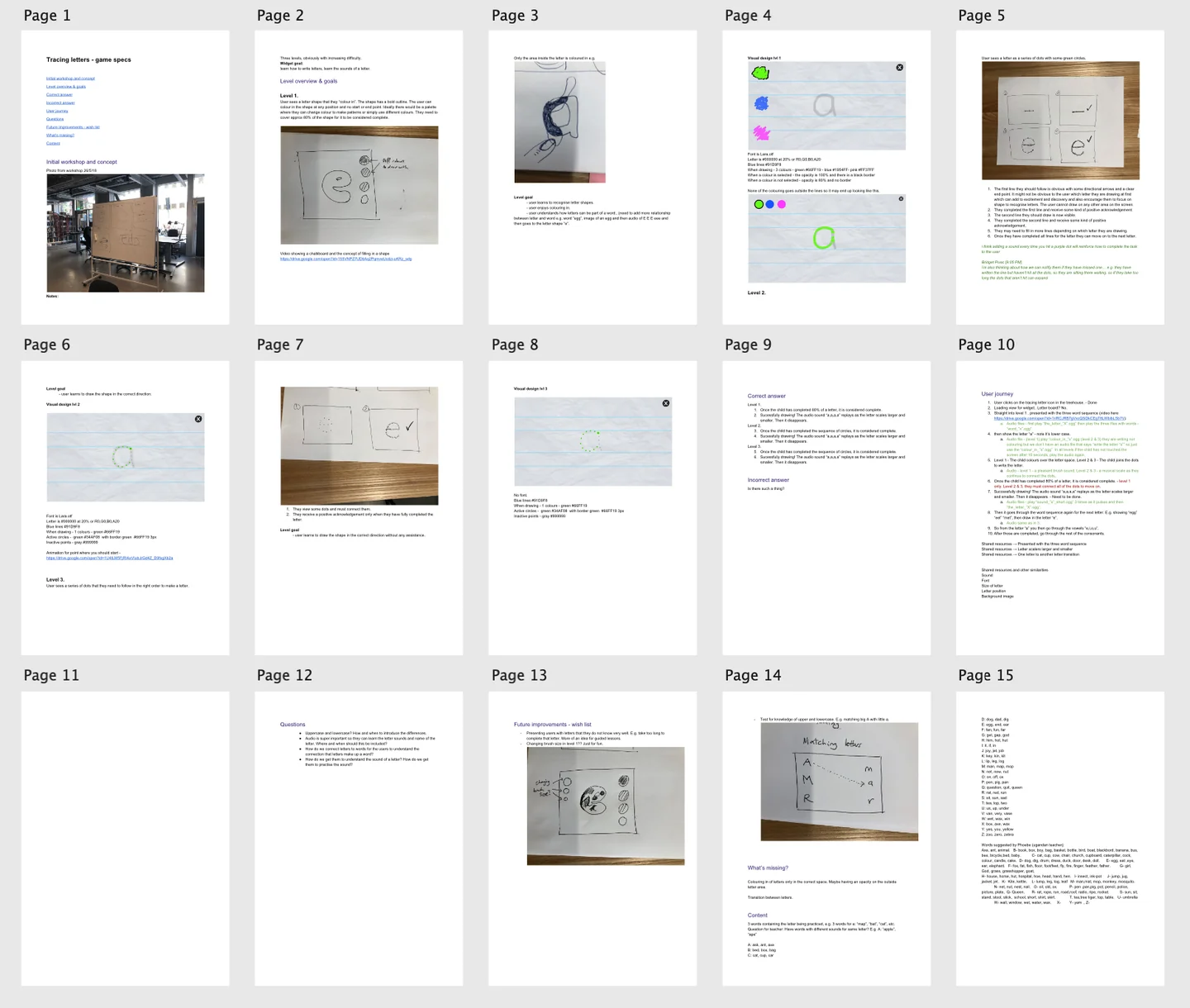
This game encouraged writing on three levels of difficulty, with the focus on learning individual letters: their shape and how they sound. There were a lot of audio effects to encourage learning and also to demonstrate the sound of the letter.
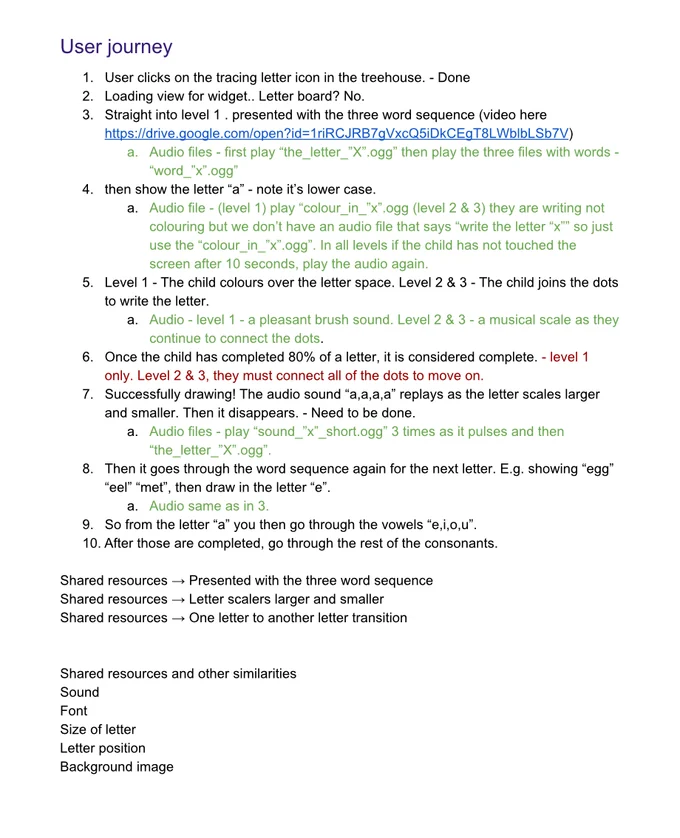
- The introduction showed the letter situated in three different words with accompanying audio.
- The first level involved colouring over a shape with an option of three colours. The goal was to make it fun and engaging while introducing the concept of a letter shape.
- The second level encouraged directional colouring-in, following the same pattern of how one would write the letter. The direction was demarcated by colourful animations.
- The third level had no obvious indicators, and the child needed to attempt to draw the lines in the correct pattern as one would write.
User research on the target market
New tech, new language and cultural relevance.
Initially the target market was 7–10 year olds in East Africa who cannot access schools. There were issues with access to smartphones or tablets, storage capacity on phones, and internet connectivity, so the app needed to be lightweight and work offline.
Additionally, there were design aspects to take into account such as designing for children who had not used touch screens before, how they would adapt to learning in a second language, and how to ensure the design was culturally relevant to them.
We conducted user research and usability testing in two rural locations (Matanana, Tanzania in 2016 and Bududa, Uganda in 2017) to research these specific areas. I wrote interview scripts, conducted interviews, transcribed and analysed data through thematic analysis. The format was primarily semi-structured interviews using a non-probability sampling method. The group consisted of 20 children, 10 parents, and 4 teachers.
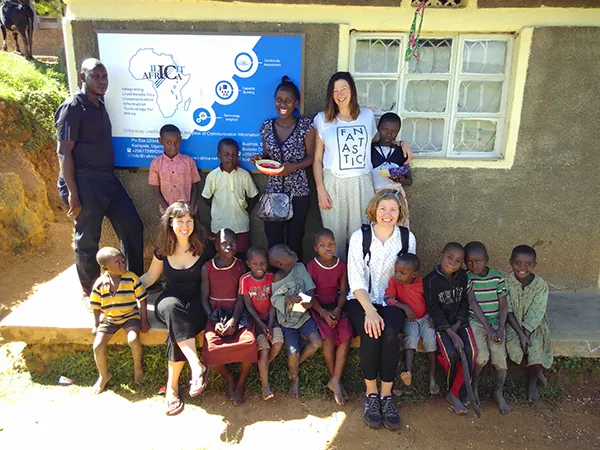 The Checheza team with our partner Illicit Africa's program director and assistant, plus the children who attend the Illicit Africa tech centre in Bududa.
New tech
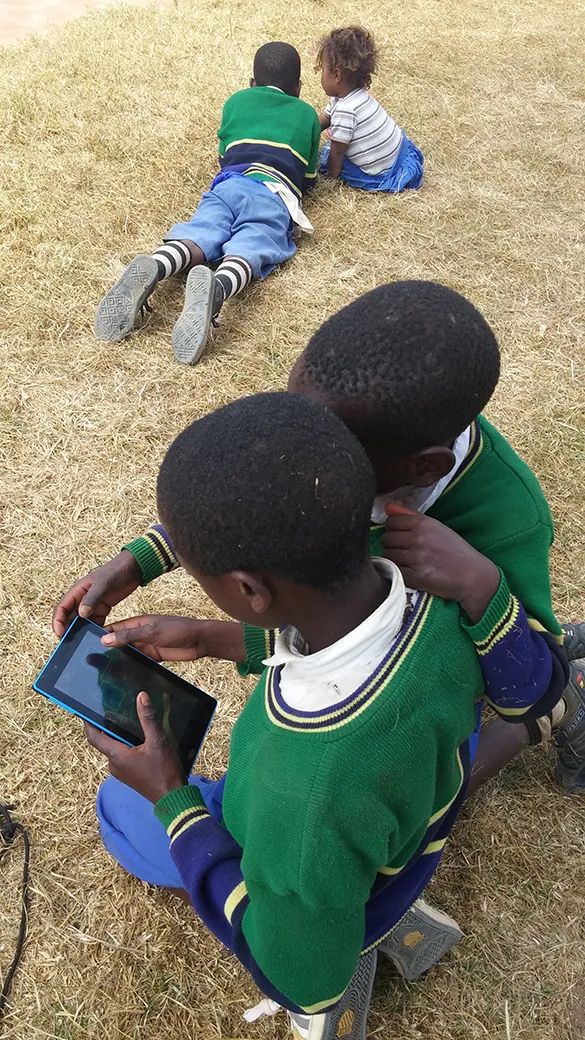
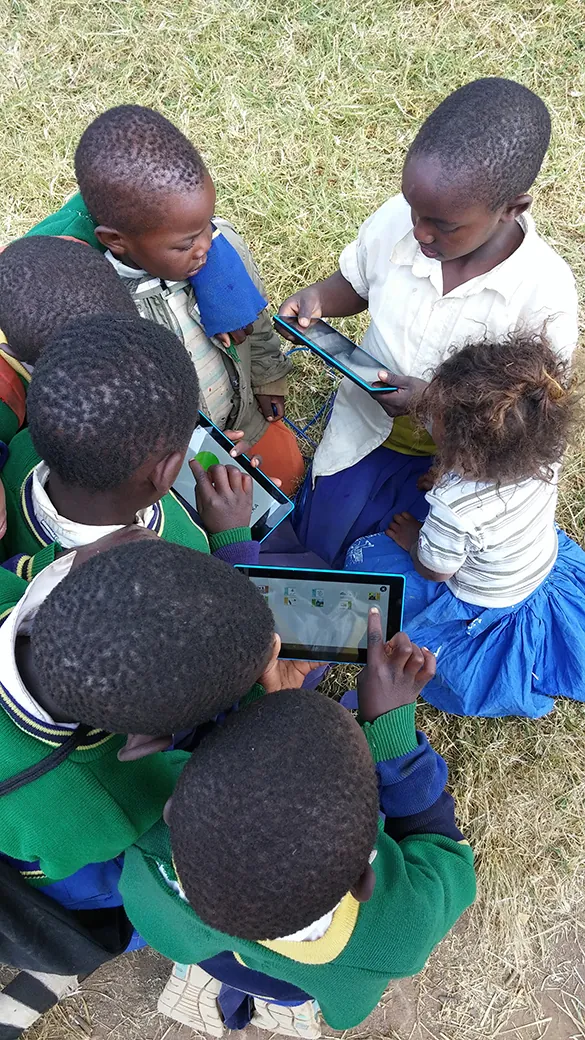
We tested competitor apps to understand how the children interacted with the devices. They were curious and explored easily to understand how the games worked. When working in pairs, they showed each other different gestures to interact. There were no issues with the kids adapting to this new tech.
Research conclusion
No specific design was needed for the children to understand how to operate the devices. If it is charged and the right app is open, they will explore and figure out the goals.
New language
The children grow up with their mother tongue (Swahili or other local languages) and start learning English once at school, at five years old. The children we tested with had a large range of English language skills, depending on their age and school engagement.
Research conclusion
We needed to design for a wide range of English language levels, as children in the same age group had varying levels of language, with no consistent level for 7–10 year olds amongst the research participants.
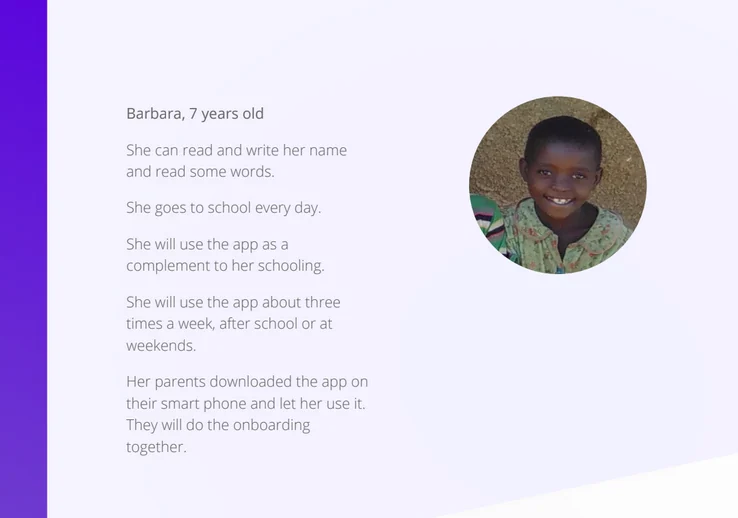 Persona built on research participants.
Solution
Reduce written text + add audio: I reduced the written language as much as possible, added voice prompts at all times, and a lot of audio.
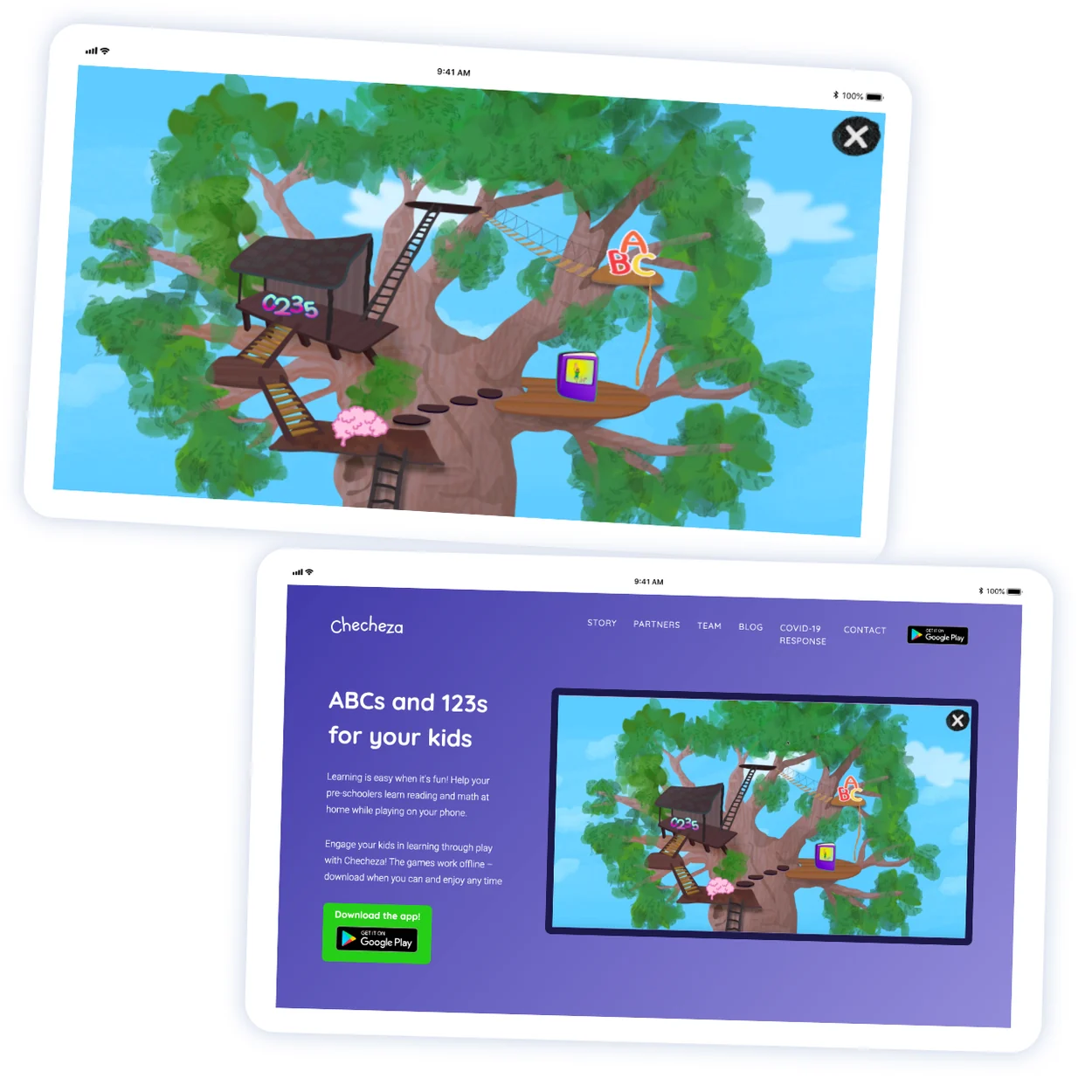
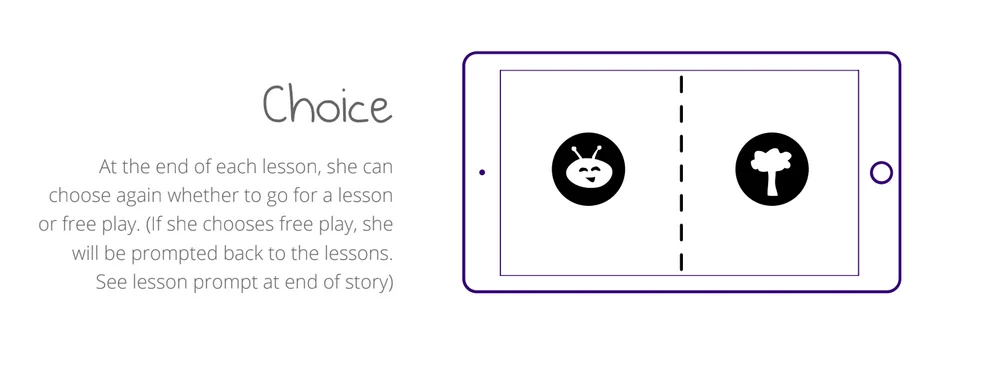
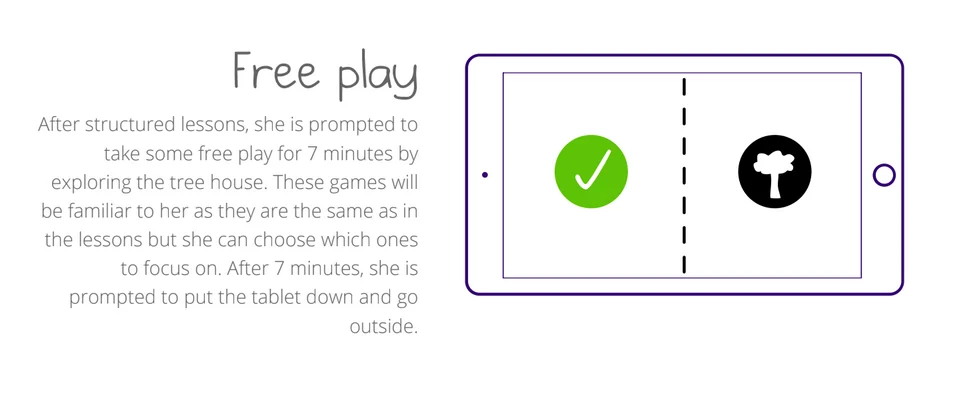
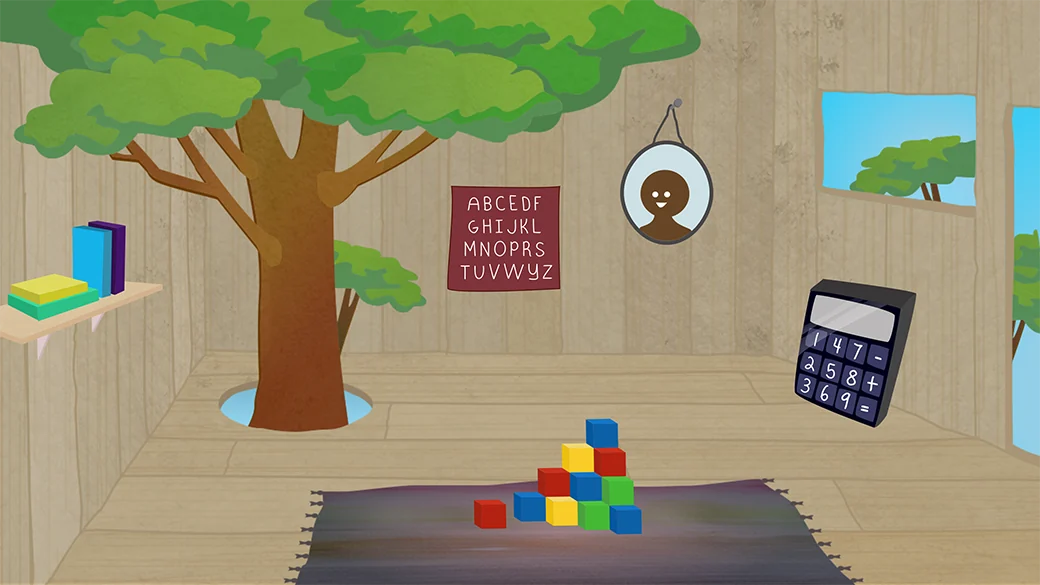
Simple menu navigation: The menu prompts (including the main tree menu) were all icon-based, with simple choices to easily guide the child throughout the learning experience.
Cultural relevance
There were several aspects to designing the app and games with cultural relevance in mind. The target market of East Africa covered several diverse countries, with multiple local languages, clothing and customs even within each country. We also wanted to step carefully with what we represented in the app, as the majority of the development team were European foreigners.
Research conclusion
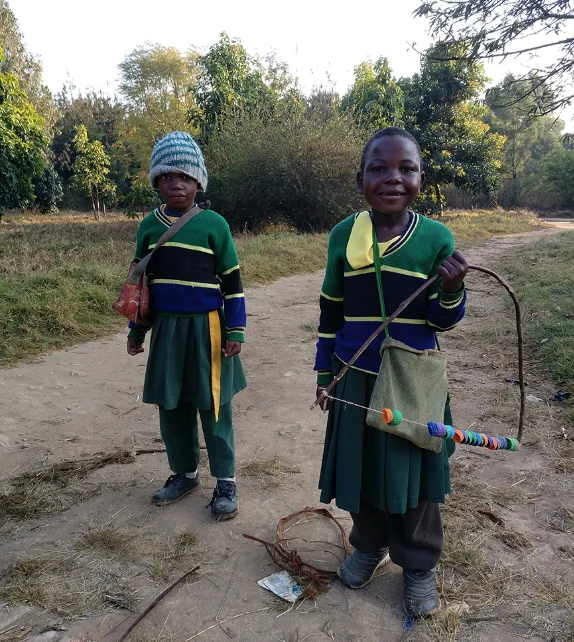
A difference we had not considered was between rural and city folk. They had different daily lives and used different tools. For example, in rural areas children would use a homemade abacus, as you see Belinda, 9 years, holding in the photo. Children in the city have calculators, and some have their own phones to use the built-in calculator functions.
Solution
Characters: We did not want to use specific human characters or depictions of clothing specific to one of the countries. It was simpler to use characters based on animals or inanimate examples.
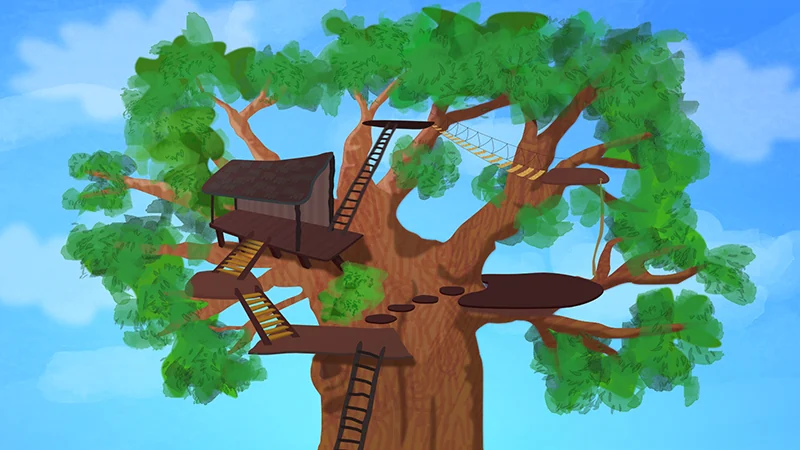
Treehouse with a native tree: Something comforting and playful, like a treehouse, based on the baobab tree, which is endemic to many locations in Africa.
Removed calculator icon: we replaced this icon with numbers to represent the maths area of the app.

Takeaway
This type of project is hugely motivating for me, working within the sector of education and gaming for children. However, it is extremely difficult to gain traction in a startup when team members have full-time employment.
Highlight
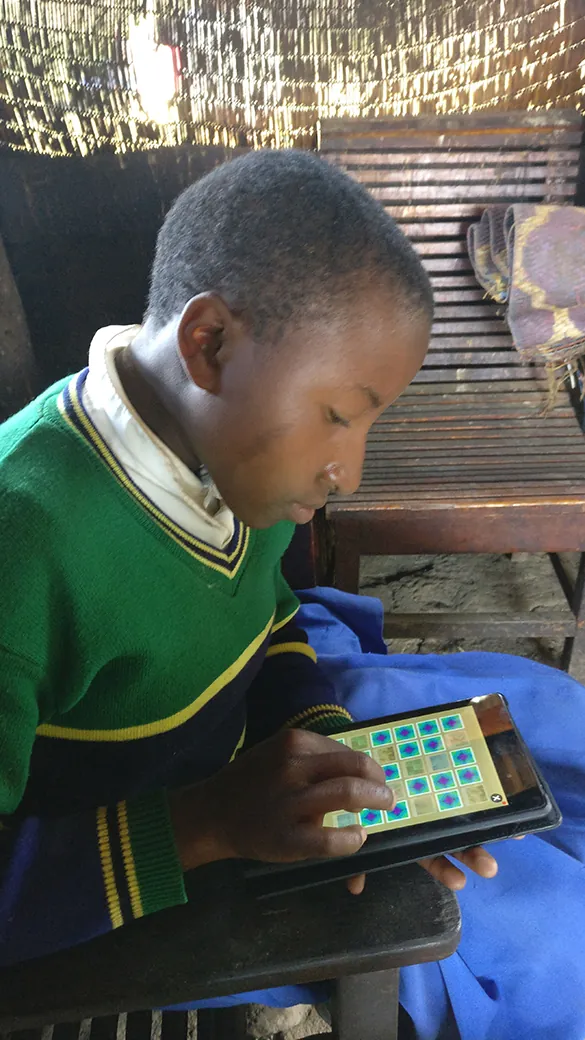
Testing with the children and seeing their interest in learning and curiosity with new tech.
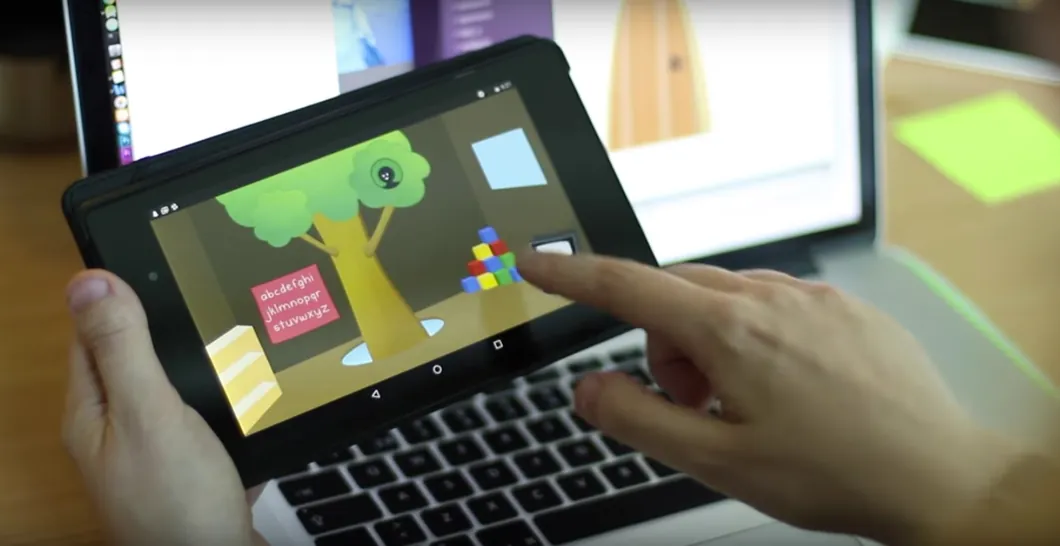 Early iterations of the game showing the enclosed treefort design.
Matanana, Tanzania
Children playing our games and listening to our books.